The short answer
House subsidence is the ground under part of a house moving down, so the footings drop and the frame racks out of shape. The first signs are usually sticking doors, sloping floors and stepped or diagonal cracks. In Australia the common causes are reactive clay drying out, leaking pipes, poor drainage, trees and poorly compacted fill. If the signs are new, growing or appear together, have a structural engineer find the cause before anyone quotes a repair.
Key takeaways
- Sticking doors, sloping floors and new cracks together are the classic signs of movement.
- Moisture is the usual trigger: leaks, poor drainage and trees change the soil under a footing.
- Movement that keeps getting worse matters more than movement that comes and goes with the seasons.
- Find the cause first: the answer is often plumbing or drainage, not underpinning.
Most houses move a little. Timber dries and shrinks, and clay soils swell and shrink with the weather, usually without doing much harm. Subsidence is different: one part of the house moves more than the rest, and the doors, floors and walls start to show it. Engineers call this building movement, and the good news is that its cause is often something you can fix once you know what it is.
House subsidence: quick facts
- First signs
- Sticking doors, new cracks, uneven or sloping floors
- Common causes
- Reactive clay, leaks, poor drainage, trees and poorly compacted fill
- What matters most
- Whether the movement is still active and getting worse
- Often the first fix
- Repairing leaks and drainage, or managing a tree
- Who to call
- An independent structural engineer, not a repair company
- Our inspection
- From $450 + GST for a typical house
What is house subsidence?
House subsidence means the ground under a house sinking and taking part of the footings with it. It almost never happens evenly. One corner or one wall drops further than the rest, the frame racks out of square, and that uneven movement is what jams doors and cracks walls. Most people notice a house sinking through its doors and floors before they see anything outside.
In Australia, subsidence is mostly about moisture. Reactive clay shrinks as it dries and swells when wet, so anything that dries or soaks the ground under one part of a house can move the footings above it. That's why a long dry spell, a leaking pipe or a large tree nearby can each set it off.
Subsidence, settlement and heave: what's the difference?
People use these words loosely, and so do some reports. Here's what each one means in plain English.
- Subsidence
- The ground under a house moving down, for example as clay dries and shrinks or wet ground softens. It's often used for any kind of sinking.
- Settlement
- The soil under a footing compressing or softening under the weight of the house. It's common on poorly compacted fill, which can keep settling long after a house is built, and after leaks or poor drainage.
- Heave
- The ground moving up. Reactive clay that takes up water swells and can lift a footing or part of a slab. Engineers say edge heave or centre heave, depending on where the lift is.
- Differential movement
- One part of a house moving more than another. This is what does the damage: a house that rose or fell evenly would show far fewer cracks.
- Seasonal vs progressive
- Seasonal movement comes and goes with wet and dry periods. Progressive movement keeps getting worse. Repeat readings tell them apart.
The difference matters because the fixes differ: a slab lifted by a leak usually needs the water stopped first, while fill that keeps settling may need a structural repair. Insurers use these words in policy exclusions too, so read does home insurance cover subsidence? before you claim. For slabs on clay, see reactive clay and slab heave explained.
What are the signs of subsidence in a house?
A sinking house rarely sends one clear signal. Look for a pattern: one sign on its own is often harmless, but several together, or one that keeps getting worse, is worth an engineer's inspection. Tick off what you see, inside and out.
- Doors sticking or no longer latching, especially several at once
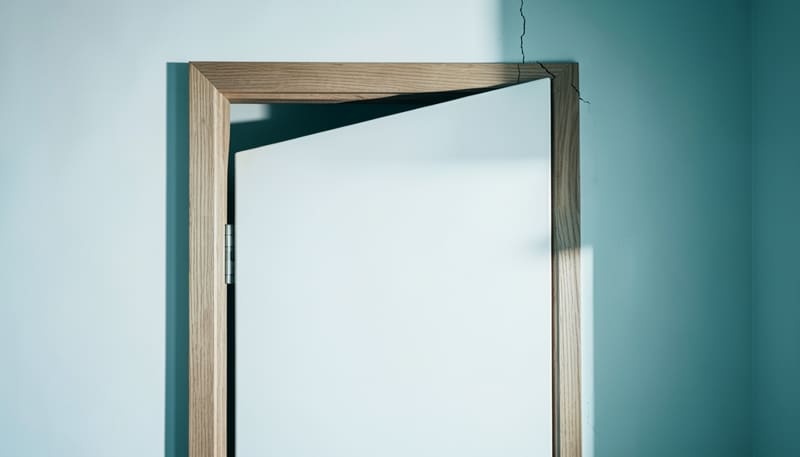
- Wedge-shaped gaps above doors, or door frames visibly out of square
- Windows that bind or won't close and lock properly
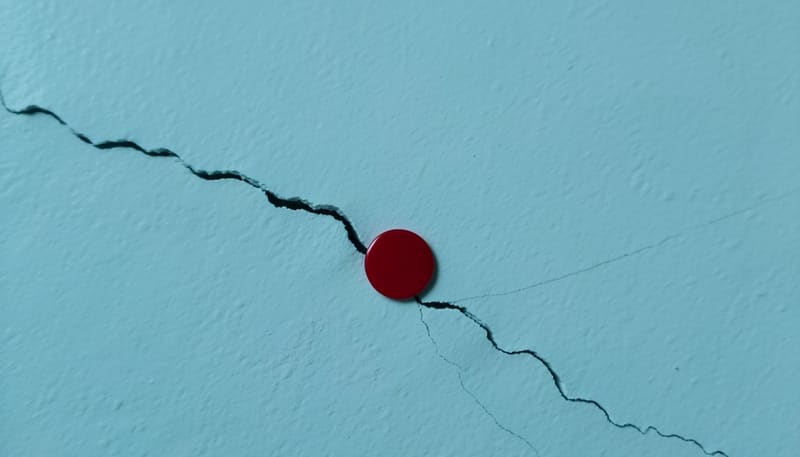
- Stepped cracks through brickwork, or diagonal cracks from door and window corners
- Cracks wider at one end than the other
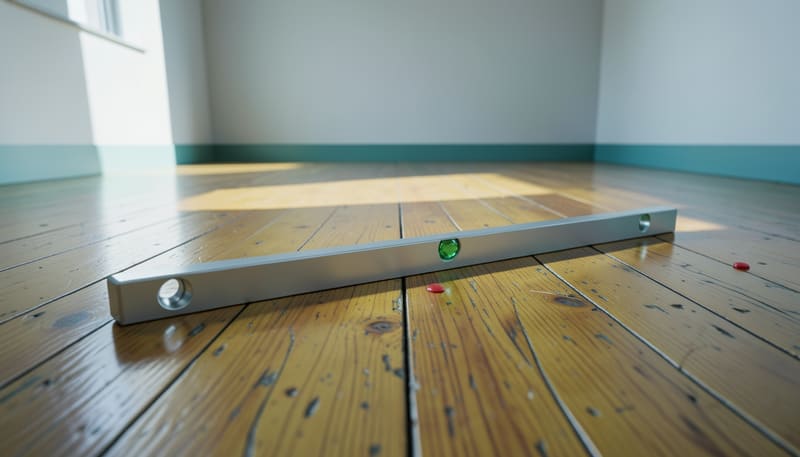
- Uneven or sloping floors, furniture that rocks, or a marble that rolls one way
- Gaps under skirting boards or between walls and ceilings
- Floor tiles cracking in a line, or a crack across a concrete slab floor
- Cracks that open and close as the weather swings from wet to dry
- Outside: water ponding against walls, downpipes discharging at the footings, or a large tree close to the house
Why do doors stick when a house moves?
When part of a house drops or lifts, door frames are pulled out of square. The door binds on one side, a wedge-shaped gap opens on the other, and a crack often runs up from a top corner of the frame, as in the photo at the top of this page. Not every sticking door means movement: timber doors can swell in humid weather and hinges work loose. A door that sticks alongside cracks, gaps or a sloping floor is the one to take seriously.
What causes uneven or sloping floors?
In a slab-on-ground house, a floor that has started to slope usually means part of the slab has settled or heaved. In a raised timber-floored house, uneven floors can come from the stumps or the ground under them, which is usually a restumping question rather than underpinning: see underpinning vs restumping.
Get advice quickly if
A crack is 5 mm or wider or growing fast, several doors jam within a few weeks, a ceiling starts to sag, or you find a leak or wet ground near the footings. Under AS 2870, wall cracks of 5 mm or more count as moderate damage or worse.
What causes house subsidence and movement?
Most house movement starts with water: too much of it in one place, or too little. The diagram shows the four most common causes, and the table adds the others an engineer checks.
What moves a house? Four common causes
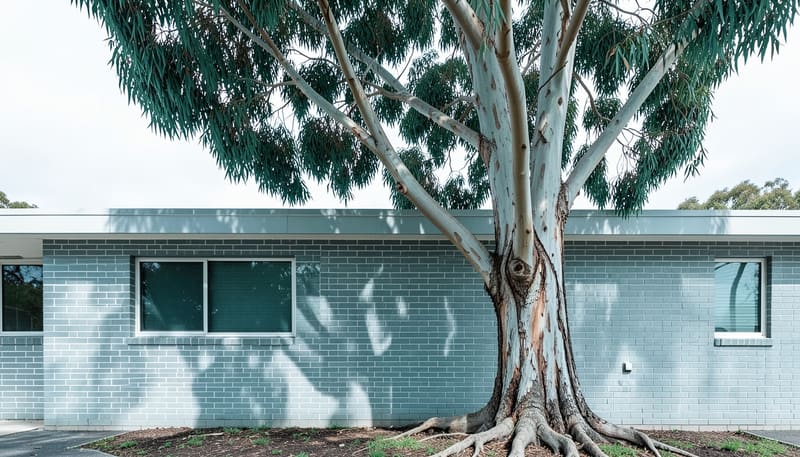
- Trees and roots draw moisture from the soil near a footing, so clay under that side shrinks.
- Reactive clay swells when wet and shrinks when dry, moving footings with the seasons.
- Leaking pipes or poor drainage soak and soften the ground under part of the house.
- Poorly compacted fill keeps settling under a footing long after the house is built.
| Cause | How it moves the house | Clues an engineer looks for |
|---|---|---|
| Reactive clay | Clay shrinks as it dries and swells when wet, so footings drop and lift with the seasons. | Cracks that open and close through the year, worse after long dry spells or heavy rain |
| Leaking pipes | A leaking water, stormwater or sewer pipe soaks and softens the soil under one part of the house. On clay it can also cause heave. | Damage clustered near a bathroom, laundry or pipe run; damp soil; sometimes confirmed by a plumbing test |
| Poor drainage and downpipes | Water ponding against the walls, or a downpipe discharging at the footing, soaks the ground beneath it. | Ponding after rain, disconnected downpipes, paving or garden beds that fall towards the house |
| Trees and large shrubs | Roots draw moisture from the soil, so clay on the side nearest the tree dries and shrinks more. | Damage worst on the tree side, and worse in dry periods |
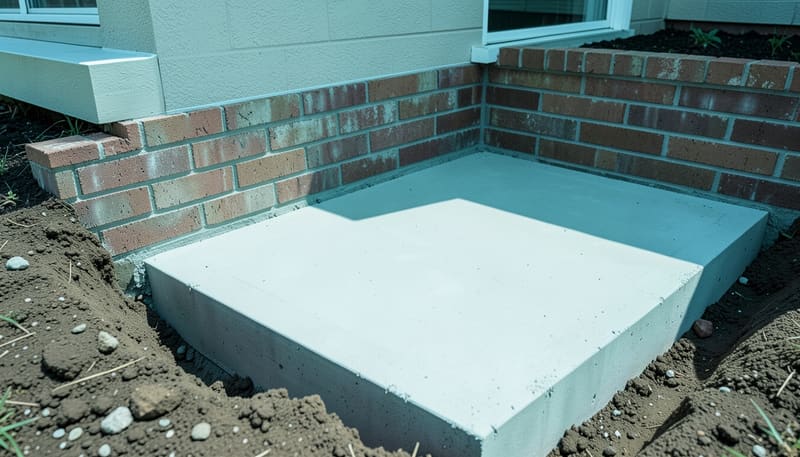
| Poorly compacted fill | Loose fill keeps settling under a footing long after the house is built. | Ongoing movement on the filled side of a sloping block |
| Soft or problem soils | Soft soils, uncontrolled fill and abnormal moisture can't support footings evenly. AS 2870 treats these as problem (Class P) sites. | Site history and, often, a soil investigation to confirm it |
| Slab heave | Moisture building up under a slab on reactive clay can lift part of it, at the edges or in the middle. | A hump in the floor, tiles cracking in a line, internal doors binding |
| Nearby excavation | Digging close to a footing without proper support can let the soil under it move. | New cracks soon after demolition, excavation or building work next door |
| Not the ground at all | Timber framing shrinks, some roof framing lifts seasonally, and roof thrust or corroded wall ties can move walls. | Cornice cracks along internal walls, opening plasterboard joints, horizontal cracks in brickwork |
Most houses have more than one contributor: a leaking pipe on reactive clay, say, or a large tree beside a filled corner. Pinning down which ones are active is the whole point of an inspection, because the cheapest fix is often not structural at all.
Is the movement seasonal or getting worse?
This is the question that decides what happens next. On reactive clay, many cracks open in one season and close in another as the soil dries and wets. That seasonal movement can often be managed by keeping the moisture around the house more even: fixing leaks, sorting out drainage and managing trees.
Progressive movement is different. The cracks get a little wider each year, doors get harder to close and the floor keeps falling. That's the kind that may need a structural repair, and it can't always be confirmed in one visit. When it can't, an engineer may recommend crack monitoring: gauges or measured points across key cracks, read at set intervals and compared with the first reading to show whether the movement is stable, seasonal or progressive.
Date everything
Dated photos and measurements you start now give an engineer a head start on the trend. Note the weather too: a crack that opened after a long dry spell tells a different story from one that opened after a burst pipe.
What to do if you think your house is moving
You can start before any inspection. These steps cost little and give an engineer far better evidence.
- Today
Check for water
Look for leaking taps and pipes, damp patches, downpipes discharging at the walls and water ponding against the house.
- Today
Record the signs
Photograph each crack with a ruler in the frame, mark its ends with a dated pencil line, and note which doors stick.
- Until assessed
Leave wide cracks unfilled
Patching a wide or growing crack hides the evidence, and it will likely crack again if the cause remains.
- Next
Book an independent engineer
A structural engineer who doesn't sell repairs finds the cause and tells you how serious it is.
- Then
Fix the cause, then monitor
Deal with leaks, drainage or trees first. If movement continues, the engineer can design and certify a repair.
When should you call a structural engineer about house movement?
- A crack is 5 mm or wider, or wider at one end than the other
- Cracks keep growing, or new ones keep appearing
- Several doors or windows start sticking within a short time
- Floors feel noticeably out of level, or tiles crack in a line
- You've found a leak under or beside the house and want to know if it has done damage
- Someone has quoted for underpinning and you want an independent view first
- You're buying a house with signs of movement: read buying a house with foundation problems
Diagnosis before any repair quote
Our foundation and crack report measures the cracks and floors, finds the likely cause and sets out your options, from $450 + GST. If someone has already quoted, start with an independent underpinning quote review.
What does an engineer's inspection cover?
A typical house takes one to three hours on site. The engineer looks outside as well as in, because footings, drainage, downpipes and trees often explain the cracks inside. Your written report then covers:
Observations
Cracks located and measured; doors, windows and floors checked; drainage, plumbing signs, trees and site conditions noted.
Crack ratings
Wall cracks rated against the AS 2870 damage categories, explained in our guide to cracks in walls.
Cause and severity
What is moving, the likely cause or causes, and how serious it is, with photos.
Recommendations
No action, maintenance, monitoring, further testing such as a soil or plumbing test, or a repair to be designed.
For particular cracks or movement, the foundation and crack report is the right fit. To have the structure of the whole house checked, for example an older home, book a house structural inspection; buyers can book a pre-purchase structural inspection. Every report is signed by a structural engineer, and because we never sell or carry out repairs, there's no reason for it to recommend more work than you need. See our pricing.
Do
- Fix leaks and make sure downpipes discharge away from the walls
- Keep dated photos and measurements of cracks and sticking doors
- Note when each sign appeared and what the weather was doing
- Get an independent engineer's view before a repair quote
Don't
- Fill wide or growing cracks before they're assessed
- Remove a large tree near the house without advice
- Assume a sinking house always needs underpinning
- Rely on a free inspection from someone selling the repair
Sources and standards referenced
- Standards Australia, AS 2870-2011 Residential slabs and footings. Site classification, including Class P problem sites, and Appendix C, Table C1: classification of damage to walls