

The short answer
A structural engineer in Sydney inspects cracks, sticking doors, sloping floors and slab movement, finds the likely cause and explains it in a signed engineer's report. The ground varies across the city, from sandstone in many eastern and northern areas to shale-derived clays in parts of western Sydney, and many terraces and semis share a wall with the house next door. Inspections start from $450 + GST, and we never sell or carry out repairs.
Structural engineer Sydney: quick facts
- Typical houses
- Terraces and semis on shared walls, older brick homes and newer slab homes
- Ground
- Sandstone in many eastern and northern areas; shale-derived clays in parts of the west
- Common triggers
- Leaks, drainage on sloping blocks, trees and seasonal clay movement
- Buying?
- NSW cooling-off is generally 5 business days, so tell us your deadline
- Signed by
- A structural engineer
- Price
- From $450 + GST, fixed quote in 1–2 business hours
Key takeaways
- Sydney's ground varies: sandstone in many eastern and northern areas, reactive shale-derived clays in parts of the west.
- In terraces and semis, a crack in a shared wall can start on either side of it.
- Water is a common trigger: leaks, downpipes and drainage on sloping blocks.
- Get the cause from an independent engineer before anyone quotes a repair.
Why do Sydney houses crack?
Usually because something under or around the house has changed its moisture or its support. On clay, that's the soil shrinking in dry spells and swelling when it's wet. On sandstone, it's more often what sits on the rock: fill that is still settling, ground softened by leaks or poor drainage, or footings that bear partly on rock and partly on softer ground. Trees and leaking pipes can trigger movement on either.
Sydney's housing adds its own layer. Many terraces and semi-detached homes share a wall with the house next door, and plenty of houses have been extended or renovated over the years. When parts of a building sit on different footings or different ground, they can move differently, and the joins between them are where cracks tend to show first.
A structural engineer's job is to work out which of these is happening in your house, how serious it is and what, if anything, needs to be done. That takes more than a look at the crack: it means reading the pattern, checking doors, floors and drainage, and looking at the site outside.
Does it matter whether your house is on sandstone or clay?
Yes, because each moves for different reasons. Sandstone, found in many eastern and northern areas, generally moves very little itself, while the shale-derived clays in parts of western Sydney are often reactive: they shrink as they dry and swell when wet, so footings on them move with the seasons.
Sandstone areas
AS 2870 puts most rock sites in Class A, with little or no ground movement. Cracking more often traces back to settling fill on a levelled block, ground softened by water, or footings that sit partly on rock and partly on softer ground.
Clay areas in the west
Where these clays are reactive, houses on them move with the seasons. Typical signs are cracks that open and close through the year, doors that stick in one season, and on some sites slab heave or settlement.
Sloping blocks
Cut-and-fill earthworks, retaining walls and water running down the slope can all affect footings, so drainage is often part of the diagnosis on a sloping site.
Trees and leaks
Wherever the house is, large trees draw moisture from clay, and leaking pipes or downpipes can soak and soften the ground under a footing.
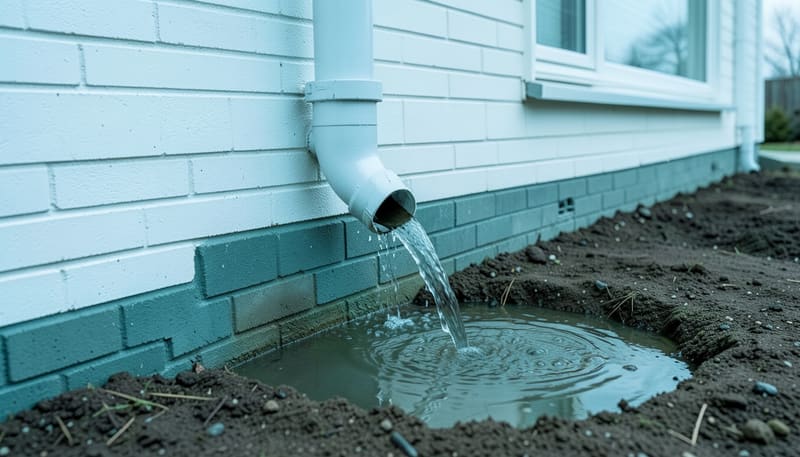
Fix the water first
If a pipe, downpipe or stormwater line is leaking near the cracks, have a licensed plumber fix it and tell us when you book. The report can then say whether the cracks need anything more than time and crack monitoring.
What if the crack is in a shared terrace wall?
Treat it as one wall with two houses on it. A shared or party wall usually supports parts of both houses, so a crack in it can come from movement under either side, from a leak in either house, or from building work next door.
We inspect your side of the wall, the rooms either side and everything visible from the street and the rear, and the report states clearly what we couldn't access. If your neighbour agrees, seeing their side too gives a much clearer answer, and the report is something you can share with them. In a terrace or semi, we check:
- Both faces of the shared wall where access allows, and where it meets the front and rear walls
- Chimney breasts, parapets and the front verandah or balcony, for cracks, lean and open joints
- Rear additions, where old and new parts may sit on different footings
- Doors, windows and floors along the shared wall
- Drainage, downpipes and leaks on both sides, as far as we can see them
If you think works next door caused new damage, a building defect report records what's there and the likely cause, which helps if the matter turns into a dispute. It's an engineering record, not legal advice.
What do crack patterns tell a structural engineer?
Which way a wall has moved, and often why. A stepped crack through mortar suggests one part of a footing has moved relative to another; a crack from a window corner shows stress concentrating at the opening; a tapered crack shows the direction of movement; and a horizontal crack can point to sideways pressure, roof thrust or corroding wall ties.
Four crack patterns an engineer reads first
- A · Stepped: follows the mortar joints up and across. Often a sign one part of the wall has moved relative to another.
- B · From a window or door corner: openings concentrate stress, so movement tends to show at their corners first.
- C · Vertical: note whether it's wider at the top or the bottom. The taper shows which way the wall has moved.
- D · Horizontal: can point to sideways pressure, roof thrust or corroding wall ties. Worth an engineer's look.
These are common readings, not a diagnosis. A horizontal crack, for example, has several possible causes and each needs a different fix, so the engineer confirms the cause on site by looking at the whole building, the ground and the drainage, not one crack in isolation.
Width is only a guide
AS 2870 rates wall cracks from Category 0 (hairline, under 0.1 mm) to Category 5 (very severe, over 25 mm). The standard treats width as a guide only, so the pattern, location and whether a crack is still growing matter just as much. Our guide to cracks in walls explains each category.
When should you call a structural engineer in Sydney?
When a crack is 5 mm or wider, keeps growing or comes with other signs that the house is moving. Book a crack inspection if you notice:
- A crack 5 mm or wider, or one that's wider at one end than the other
- Cracks that keep growing, or new cracks after heavy rain or a long dry spell
- Doors or windows that suddenly stick, or gaps opening above door frames
- Floors that slope, or gaps opening under skirting boards
- Cracks across a slab floor, or tiles cracking in a line
- A crack in a shared wall that shows on both sides, or keeps reopening after it's filled
Ceiling cracks on their own are usually less worrying, because plasterboard joints open as framing shrinks. A sagging ceiling or a spreading water stain is different and needs prompt attention. If you're unsure, our guide to house subsidence and movement covers the signs in more detail.
What's in a structural engineer's report?
A plain-English account of what is moving, why, how serious it is and what to do next, signed by the engineer. Every report we write in Sydney covers:
- The concern and scope: what you asked us to look at, and what we inspected
- Observations: cracks located and measured for width, length and pattern; doors, windows and floors; drainage, plumbing signs, trees and site conditions
- Crack ratings against the AS 2870 damage categories
- The likely cause or causes, and how serious the problem is
- Recommendations: no action, maintenance such as fixing leaks or drainage, monitoring, further testing such as a soil or plumbing test, or a repair to be designed
- Photos, the engineer's signature and the limits of the inspection
Because we don't sell repairs, the recommendations aren't steered toward a product. You can hand the report to a builder, your insurer or the neighbour on the other side of a shared wall, and it reads the same for all of them.
Which structural inspection do you need in Sydney?
Pick the service that matches where you are. Each one is carried out by an independent engineer who doesn't sell repairs, with a fixed quote before we start. Searching for a foundation engineer in Sydney? For a house, that's a structural engineer who looks at the footings and the ground as well as the walls, which is what every inspection below includes.
- Foundation and crack report: cracks, sticking doors or slab movement measured, rated against AS 2870 and traced to a likely cause. From $450 + GST.
- House structural inspection: a structural check of a house you own, with a signed engineer's report. From $450 + GST.
- Pre-purchase structural inspection: for a house you're buying that shows cracks or movement. From $450 + GST.
- Underpinning quote review: an independent second opinion on a quote, from documents and photos. From $390 + GST.
- Underpinning design and certification: the design, approval documents, stage inspections and certification. Fixed quote per job.
- Crack monitoring: readings over time to show whether movement is stable, seasonal or progressive. Fixed quote per job.
- Building defect report: structural defects recorded, rated and explained, for owners, buyers or a dispute. Fixed quote per job.
What happens if your house needs underpinning?
We design and certify it; we don't build it. Underpinning is structural work that usually needs approval with an engineer's design, and your certifier or council can confirm exactly what your job needs.
The design follows the diagnosis. Mass concrete, concrete or bored piers, screw piles and resin injection each suit different soils and causes, and none suits every house, which is why the method should be chosen after the cause is known, not before. Sometimes the diagnosis needs a geotechnical soil investigation or a plumbing test first, and the report will say so.
Once the design is ready, any licensed contractor can price and build it, and we inspect the critical stages and certify the finished work. Already holding a quote? Start with our underpinning quote review. Otherwise, read what underpinning involves, check what underpinning costs, or see underpinning design and certification.
Buying a terrace or semi in Sydney?
Have a structural engineer look first if the house shows cracks, sticking doors or sloping floors, or if the building inspection recommends one. That matters most for terraces and semis, where a crack in the shared wall can involve the house next door as well.
A pre-purchase structural inspection focuses on the structure: what's moving, why, how serious it is and what kind of repair, if any, is likely to be needed. It starts from $450 + GST.
Cooling-off in NSW
The general cooling-off period for residential sales in NSW is 5 business days, and exceptions such as auctions apply, so check your contract. Tell us your deadline when you ask for a quote and we'll confirm whether we can meet it. General information only, not legal advice.
How does a structural inspection in Sydney work?
Six steps, from the first photos to a certified repair if one is needed. The process can end at step four or five if the cause turns out to be something simpler than underpinning.
- Before you call
Gather photos and history
Photograph the cracks with a ruler in shot, note when they appeared, and list any leaks, renovations or building works next door. For a shared wall, note what you can see on the neighbour's side.
- Within 1–2 business hours
Receive a fixed quote
Send the address and your photos. We reply with a fixed fee and an inspection time, so you know the cost before anything is booked.
- On site, 1–3 hours
Inspect inside and out
The engineer measures and maps the cracks, checks doors, windows and floors, and looks at drainage, downpipes, trees, retaining walls and the slope of the site.
- After the inspection
Get a signed report
Cracks are rated against AS 2870 and the likely cause is explained, with clear recommendations: no action, maintenance, monitoring, further testing or a repair to be designed.
- If water is involved
Fix the cheaper causes first
Where a leak, downpipe or drainage problem is the likely cause, it gets fixed first, and repeat crack readings show whether the movement settles down.
- If repairs are needed
Design, approval and certification
We design the repair, prepare documents for approval, inspect the critical stages and certify the work. Any licensed contractor can build it.
How much does a structural engineer cost in Sydney?
Our on-site inspections with a written engineer's report start from $450 + GST for a typical house, including terraces and semis. Underpinning quote reviews start from $390 + GST, and design, certification, defect reports and monitoring are fixed-quoted for each job.
The fixed price depends on the size of the house, what needs checking and access, including access to a neighbour's side of a shared wall. A typical house takes one to three hours on site, and the report delivery date is confirmed in your quote. See structural engineer fees, or request a crack inspection now.
Standards and legislation referenced
- Standards Australia, AS 2870-2011 Residential slabs and footings. Site classification, and Appendix C, Table C1: classification of damage to walls