The short answer
Most cracks in walls are harmless: hairline shrinkage or settlement cracks under 1 mm that only need filling and painting. Worry when a crack is 5 mm or wider, keeps growing, steps through brickwork, is wider at one end, or comes with sticking doors, sloping floors or ceiling cracks. Then have a structural engineer find the cause.
Key takeaways
- Width is a guide: under 1 mm is usually cosmetic, 5 mm or more needs an engineer.
- A crack that is still growing matters more than an old, wide one.
- The pattern tells you which way the wall has moved.
- Find the cause before anyone quotes a repair.
House cracks are one of the most common reasons homeowners call an engineer, and one of the most common reasons they get sold more repair than they need. A crack is a symptom. Before anything is filled, pinned or underpinned, it helps to know how wide it is, how it's behaving and what is making the house move.
Cracks in walls: quick facts
- Usually harmless
- Hairline and fine cracks under 1 mm that aren't growing
- Get it checked
- 5 mm or wider, growing, stepped or tapered cracks
- Common causes
- Reactive clay, leaks, trees, poor drainage and shrinkage
- How to measure
- A crack width gauge or fine ruler at the widest point
- Who to call
- An independent structural engineer, not a repair company
- Our crack report
- From $450 + GST for a typical house
How do you tell if a crack in a wall is serious?
Look at five things together. One on its own rarely tells the whole story.
Width
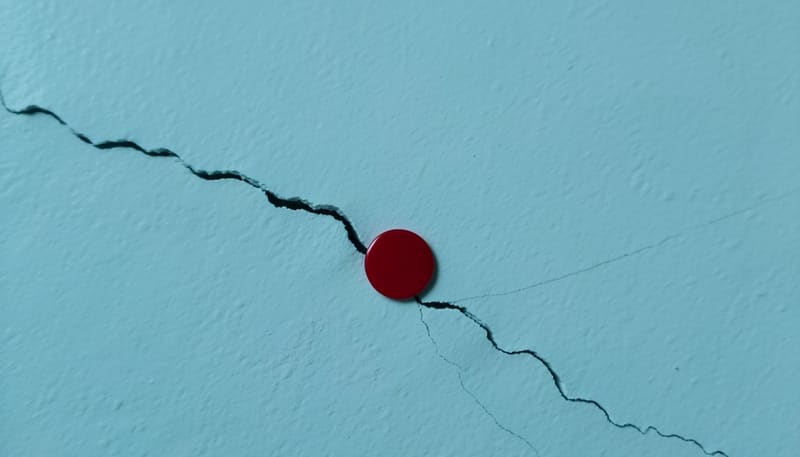
Measure the widest point. Fine cracks under 1 mm are usually cosmetic; 5 mm or more is moderate damage under AS 2870.
Is it growing?
A crack that lengthens or widens over weeks or seasons shows the movement is still active.
Pattern
Stepped, diagonal, tapered or horizontal cracks each point to different kinds of movement.
Location
Cracks at door and window corners, external corners and wall junctions often come from footing movement.
Other signs
Sticking doors, sloping floors and gaps at skirting boards suggest the whole structure is moving.
Moisture
Leaks, poor drainage or a nearby tree change the soil under a footing and often explain the timing.
Engineers often rate wall cracks against the damage categories in AS 2870, the Australian Standard for residential slabs and footings. It's the closest thing to an official crack chart, and the one we use in our reports.
- Cat 0Negligible< 0.1 mm
Hairline cracks.
- Cat 1Very slight< 1 mm
Fine cracks which do not need repair.
- Cat 2Slight< 5 mm
Cracks noticeable but easily filled. Doors and windows stick slightly.
- Cat 3Moderate5–15 mm
Cracks can be repaired; some wall may need replacing. Doors and windows stick, service pipes can fracture, weathertightness often impaired.
- Cat 4Severe15–25 mm
Extensive repair: sections of wall broken out and replaced. Frames distort, walls lean or bulge, some loss of bearing in beams.
- Cat 5Very severe> 25 mm
Major repair, partial or complete rebuilding. Beams lose bearing, walls lean badly and need shoring. Danger of instability.
The standard says width is only a guide
Several fine cracks in one wall can matter more than a single wider one, and a crack that keeps growing matters more than an old, stable one. That's why engineers look at the pattern and take repeat measurements, rather than relying on one reading.
What do different crack patterns mean?
The shape of a crack is a clue to which way the building has moved. These are the four patterns we see most often in houses.
Four crack patterns an engineer reads first
- A · Stepped: follows the mortar joints up and across. Often a sign one part of the wall has moved relative to another.
- B · From a window or door corner: openings concentrate stress, so movement tends to show at their corners first.
- C · Vertical: note whether it's wider at the top or the bottom. The taper shows which way the wall has moved.
- D · Horizontal: can point to sideways pressure, roof thrust or corroding wall ties. Worth an engineer's look.
Cracks in brick walls and brickwork
Cracks in brickwork usually follow the weakest path: the mortar joints. A stair-step crack (also called a stepped crack) climbs diagonally through the joints, and it's the classic sign that one part of the wall has moved relative to another. When the crack runs straight through the bricks instead, the movement has usually been sudden or large.
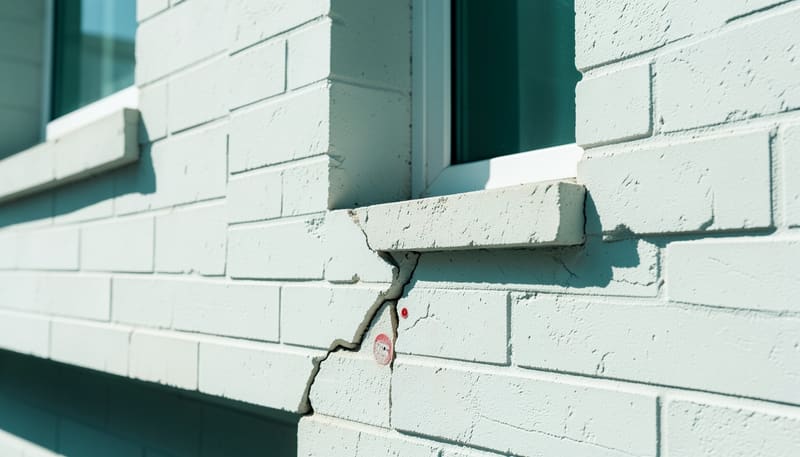
- Stepped cracks through mortar often come from footing movement, such as reactive clay shrinking under one corner.
- Vertical cracks that taper are worth measuring at both ends: the wider end shows which way the wall has moved.
- Horizontal cracks along a mortar course can point to sideways pressure, roof thrust or corroding wall ties.
- Cracks at both the inside and outside of the same wall usually mean the movement is structural, not just in the render or plaster.
Cracks in ceilings and cornices
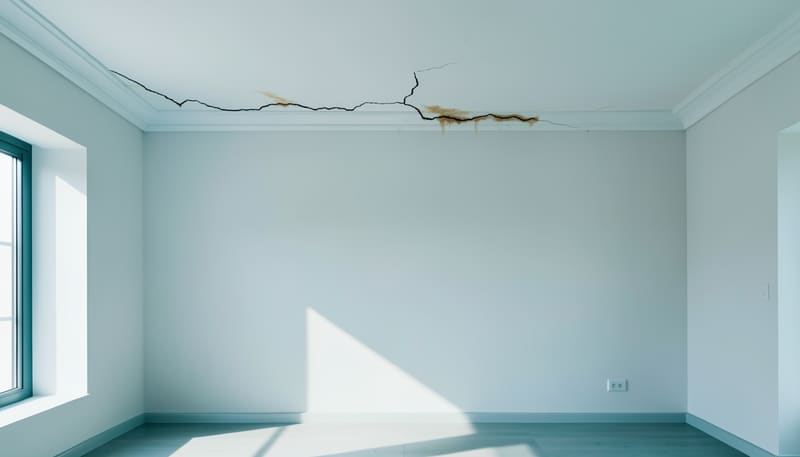
Ceiling cracks are common and usually less worrying than wall cracks. Plasterboard joints can open as timber framing dries and shrinks, and in some houses roof framing lifts slightly in certain seasons, pulling ceilings away from internal walls along the cornice.
Ceiling cracks that need attention
Get advice quickly if a ceiling is sagging, the crack is stained or damp, it runs across the room rather than along a joint, or it appears at the same time as wall cracks and sticking doors.
Structural cracks vs cosmetic cracks
| Sign | Usually cosmetic | Likely structural, get it checked |
|---|---|---|
| Width | Hairline to under 1 mm | 5 mm or more, or wider at one end |
| Behaviour | Stable for years | Growing, or opening and closing with the seasons |
| Pattern | Fine and random, along plaster joints | Stepped through brickwork, diagonal from corners, horizontal |
| Where | Plaster and paint only | Through the wall, or both inside and outside |
| Other signs | None | Sticking doors, sloping floors, gaps at skirting boards |
If a crack sits in the right-hand column, our foundation and crack report finds the cause and tells you how serious it is.
What causes settlement and foundation cracks?
Settlement cracks appear when part of a footing moves relative to the rest. In Australian houses the cause is usually moisture: reactive clay shrinks as it dries and swells when wet, so anything that dries or soaks the ground under one part of the house can crack the walls above it.
What moves a house? Four common causes
- Trees and roots draw moisture from the soil near a footing, so clay under that side shrinks.
- Reactive clay swells when wet and shrinks when dry, moving footings with the seasons.
- Leaking pipes or poor drainage soak and soften the ground under part of the house.
- Poorly compacted fill keeps settling under a footing long after the house is built.
Because so many cracks start with water or trees, the cheapest fix is often not structural at all: repairing a leaking pipe, fixing a downpipe that discharges against the wall, or managing a tree. That's why the diagnosis has to come before the quote. Read more in our guides to house subsidence and movement and reactive clay and slab heave.
How to monitor a crack in a wall yourself
A simple record over a few weeks tells an engineer far more than a single photo. Here's how to keep one.
- Day 1
Mark the ends
Draw a short pencil line across each end of the crack and write the date beside it.
- Day 1
Measure the width
Use a crack width gauge or a fine ruler at the widest point, and note where you measured.
- Day 1
Photograph it with a scale
Shoot straight on with a ruler or coin in the frame, from a spot you can find again.
- Every few weeks
Re-check regularly
Measure and photograph again, especially after heavy rain or a long dry spell.
- If it changes
Call an engineer
Growth past your marks, widening or new cracks mean the movement is active.

When should you call a structural engineer about cracks?
- A crack is 5 mm or wider, or wider at one end than the other
- It keeps growing past your pencil marks, or new cracks keep appearing
- Doors or windows start sticking, or gaps open at skirting boards
- Floors feel out of level, or tiles crack in a line
- Someone has quoted for underpinning and you want an independent view first
- You're buying a house with visible cracking
Book a crack report before a repair quote
Our foundation and crack report measures the cracks, rates them against AS 2870, finds the likely cause and sets out your options, from $450 + GST. If you already have an underpinning quote, start with an independent quote review.
Do
- Measure, photograph and date the crack
- Check for leaks, blocked drains and downpipes
- Note when it appeared and what the weather was
- Get an independent engineer's view before a repair quote
Don't
- Fill or paint over a wide crack before it's assessed
- Assume every crack needs underpinning
- Rely on a free inspection from someone selling the repair
- Ignore a crack that keeps growing
Sources and standards referenced
- Standards Australia, AS 2870-2011 Residential slabs and footings. Appendix C, Table C1: classification of damage to walls