
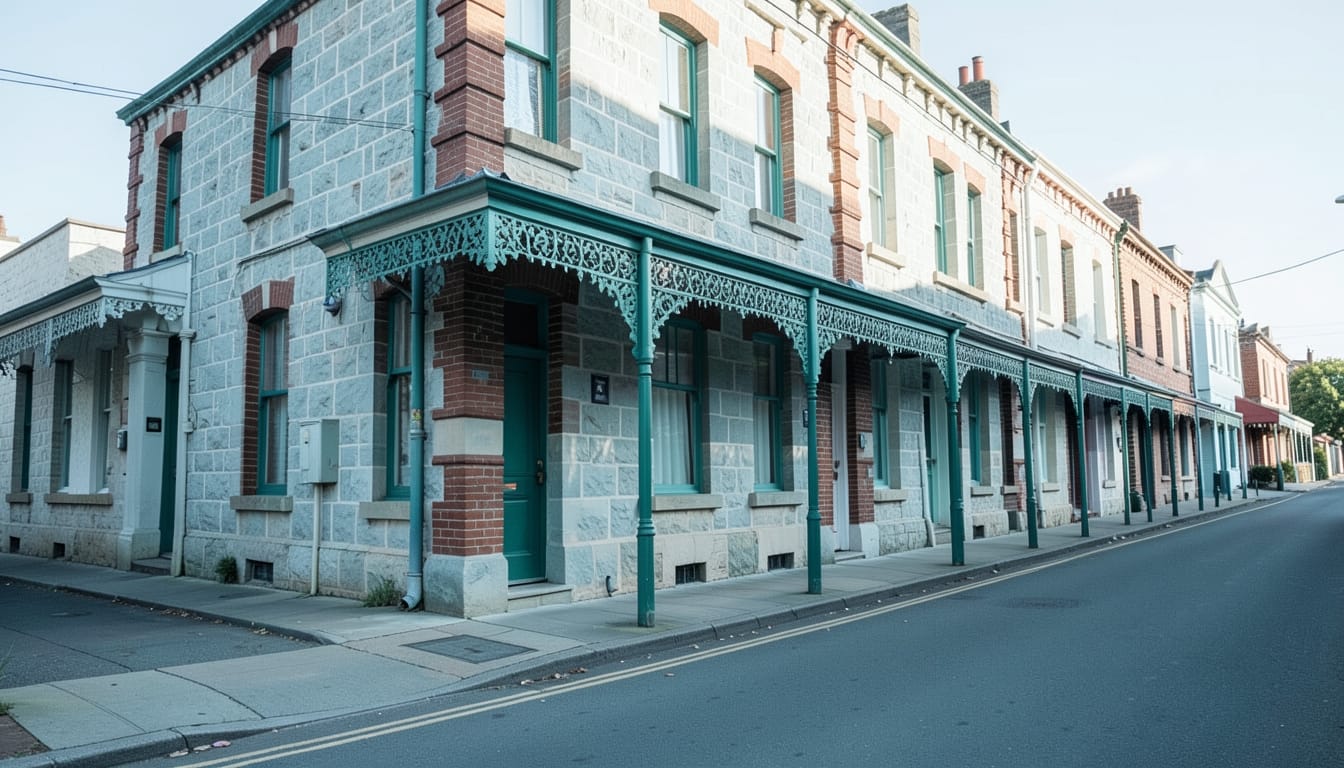
The short answer
A structural engineer in Adelaide inspects cracks, sticking doors, sloping floors and slab movement, finds the likely cause and explains it in a signed engineer's report. Much of metropolitan Adelaide sits on reactive clay, with many sites classed H1, H2 or E, so stone villas and double brick homes often crack as the ground moves with the seasons. Inspections start from $450 + GST, and we never sell or carry out repairs.
Structural engineer Adelaide: quick facts
- Typical houses
- Stone villas and cottages, double brick, brick veneer and newer slab homes
- Ground
- Reactive clay across much of the metro area; many sites classed H1, H2 or E
- Common signs
- Cracks through stone and brick, sticking doors and slab movement
- Common triggers
- Long dry spells, large trees, leaking pipes and poor drainage
- Signed by
- A structural engineer
- Price
- From $450 + GST, fixed quote in 1–2 business hours
Key takeaways
- Stone and double brick are stiff, so footing movement shows up as cracks rather than bending.
- Engineers rate wall cracks from Category 0 to Category 5 under AS 2870, and width is only a guide.
- Large trees, leaks and drainage often explain why one side of a house moves more than the other.
- Find the cause before anyone quotes underpinning.
Why do so many Adelaide homes crack?
Because much of metropolitan Adelaide sits on reactive clay, and many homes are built of stiff masonry that shows the movement clearly. As the clay dries and shrinks, then wets and swells, footings move a little each year, and stone and brick walls crack rather than bend.
Many Adelaide sites are classed H1, H2 or E under AS 2870, meaning highly or extremely reactive. On ground like that, a house moves more between wet and dry seasons, and anything that dries or wets one part of the site more than the rest, such as a large tree, a leaking pipe or a downpipe emptying beside a wall, can turn normal movement into cracking.
Older stone villas and double brick homes can carry a long history of cracks that have been filled, painted over and reopened. A structural engineer in Adelaide reads that history: which cracks are old and stable, which open and close with the seasons, and which are getting worse. That distinction decides whether you need a repair at all.
What do site classes H1, H2 and E mean for your home?
They're the highly and extremely reactive site classes in AS 2870, and many Adelaide sites fall into them. The class describes how far the ground surface is expected to move as the soil wets and dries, called the characteristic surface movement (ys).
- Class A
- Little or no ground movement. Most sand and rock sites.
- Class S
- Slightly reactive: 0–20 mm of characteristic surface movement.
- Class M
- Moderately reactive: 20–40 mm.
- Class H1
- Highly reactive: 40–60 mm.
- Class H2
- Highly reactive: 60–75 mm.
- Class E
- Extremely reactive: more than 75 mm.
- Class P
- Problem sites, such as soft soils, uncontrolled fill, trees or abnormal moisture conditions.
A geotechnical (soil) investigation classifies a particular site, and newer homes may have their class on the footing drawings. For an older villa, the engineer starts with how the house has actually behaved: the crack pattern, floor levels, doors and the site around it. If a repair is being designed, a soil investigation may be needed first, and the report will say so.
One reading isn't enough on reactive clay
A crack measured after a long dry spell can look worse than it will after rain. Where it matters, repeat readings or crack monitoring show whether movement is seasonal or progressive before anyone designs a repair.
For the mechanics behind this, read our guide to reactive clay and slab heave.
How do engineers rate cracks in Adelaide homes?
Against the AS 2870 damage categories, from Category 0 (negligible) to Category 5 (very severe). Width is a guide only: the number of cracks, their pattern and location, and whether they're still growing matter just as much.
- Cat 0Negligible< 0.1 mm
Hairline cracks.
- Cat 1Very slight< 1 mm
Fine cracks which do not need repair.
- Cat 2Slight< 5 mm
Cracks noticeable but easily filled. Doors and windows stick slightly.
- Cat 3Moderate5–15 mm
Cracks can be repaired; some wall may need replacing. Doors and windows stick, service pipes can fracture, weathertightness often impaired.
- Cat 4Severe15–25 mm
Extensive repair: sections of wall broken out and replaced. Frames distort, walls lean or bulge, some loss of bearing in beams.
- Cat 5Very severe> 25 mm
Major repair, partial or complete rebuilding. Beams lose bearing, walls lean badly and need shoring. Danger of instability.
Fine cracks in the lower categories often need nothing more than filling, monitoring or a drainage fix. But a crack that grows every summer tells you more than a wider one that hasn't moved in years, which is why the engineer looks at behaviour over time as well as width. Our guide to cracks in walls explains what each category means in practice.
What happens to stone villas and double brick homes?
They crack, usually through the mortar joints and around openings, because solid masonry is stiff and can't follow the ground as it moves. Here's what the engineer looks at in each type of house.
Stone villas and cottages
Bluestone or sandstone fronts, often with brick quoins. Cracks tend to step around the stones and open at window heads and corners, so we map them inside and out.
Double brick
Two leaves of brick, so a crack outside is checked against the plaster inside. A crack through both faces of a wall usually means structural movement.
Brick veneer
A brick skin around a timber frame. Movement shows as cracks in the brickwork outside and in plaster, cornices and door frames inside.
Verandahs, floors and slabs
Verandah posts and floors, timber floors and newer slabs sit on the same moving ground, so floor levels and slab cracks are checked too.
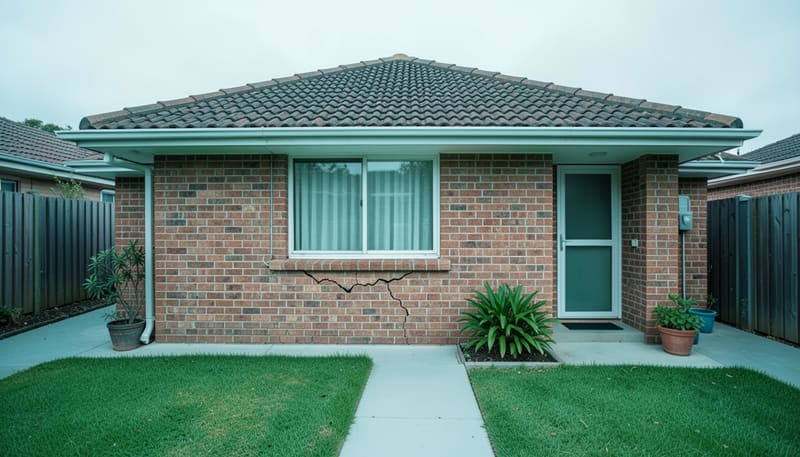
The inspection goes beyond the street face. Chimneys and parapets, verandah posts and floors, front fences and garden walls are checked, along with any rear additions, where a newer part of the house on different footings can move differently from the original villa.
Can trees, leaks and drainage cause movement in Adelaide?
Yes, and they're among the most common triggers. Large trees draw moisture from the clay near a footing, while leaking pipes, downpipes and poor drainage soak it, so one side of a house can move differently from the other.
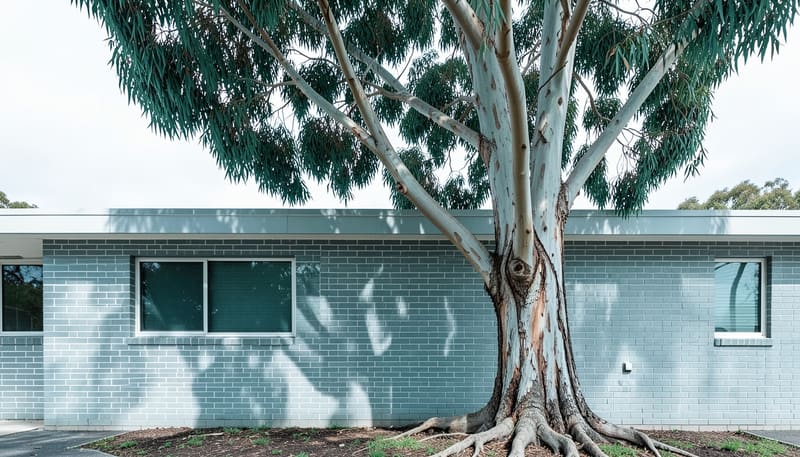
Outside the house, the engineer checks:
- Trees and large shrubs: their size and how close they are to the walls
- Downpipes and stormwater: where the water actually goes after rain
- Paths, paving and garden beds: whether water drains away from the walls or toward them
- Plumbing signs: damp patches, leaks and areas that stay wet when the rest of the site is dry
Think before removing a big tree
Taking out a large tree near a house on reactive clay changes the soil moisture under nearby footings, and the clay can swell as it re-wets. Get an engineer's view before a big tree close to the house comes out.
More on how ground movement develops is in our guide to house subsidence and movement.
Which structural inspection do you need in Adelaide?
Choose the service that matches where you are. Each is carried out by an independent engineer, with a fixed quote before we start. If you need a foundation engineer in Adelaide, for a house that's a structural engineer who assesses the footings, slab and clay movement together with the walls above, and a crack inspection is usually the place to start.
- Foundation and crack report: cracks measured, rated against AS 2870 and traced to a likely cause, with clear recommendations. From $450 + GST.
- House structural inspection: a structural check of a home you own, from footings to roof framing. From $450 + GST.
- Pre-purchase structural inspection: the cracks in a villa you're buying, explained before you commit. From $450 + GST.
- Underpinning quote review: a second opinion on a quote from documents and photos. From $390 + GST.
- Crack monitoring: tell-tale gauges or measured points read over time to separate seasonal from progressive movement. Fixed quote per job.
- Building defect report: structural defects located, rated and explained for owners and buyers, or as evidence in a dispute. Fixed quote per job.
Whichever you book, the structural engineer's report follows the same structure, so you can act on it or pass it to a builder, insurer or buyer:
| Report section | What it tells you |
|---|---|
| Concern and scope | What you asked us to look at, and what was inspected |
| Observations | Cracks located and measured for width, length and pattern; doors, windows and floors; drainage, plumbing signs, trees and the site |
| Crack ratings | Each significant crack rated against the AS 2870 damage categories |
| Cause and severity | The likely cause or causes, and how serious the problem is |
| Recommendations | No action, maintenance such as fixing leaks or drainage, monitoring, further testing such as a soil or plumbing test, or a repair to be designed |
| Evidence and limits | Photos, the engineer's signature and the limits of the inspection |
If repairs are needed, who should design them?
An independent engineer, before any contractor starts. Underpinning is structural work that usually needs approval with an engineer's design, and your building surveyor or certifier can confirm what applies to your job. We design it, prepare the documents for approval, inspect the critical stages and certify the work, and any licensed contractor can build it.
The method follows the cause. Mass concrete, concrete piers, screw piles and resin injection each suit different soils and causes, and none suits every house. On highly reactive clay, the design also needs to allow for ground that will keep moving with the seasons. Read what underpinning is, compare underpinning costs, or see underpinning design and certification.
A repair company's inspection
- Usually free, because it leads to a quote
- Tends to recommend the method that company sells
- May not test why the ground moved
- Scope and price set by the seller
An independent engineer
- A fixed fee, whether or not you repair
- Finds the cause first, then sets out the options
- Compares methods without selling any
- Designs and certifies the repair if one is needed
Quoted for underpinning already?
An underpinning quote review checks whether the cause has been identified, whether the scope fits and what's left out, from $390 + GST, before you sign anything.
Buying a stone villa or brick home in Adelaide?
Have the cracks explained before you commit. Older villas often show some cracking, and the question is whether it's old and stable, seasonal, or still getting worse. A building inspector's report is a good general check; a structural engineer can tell you the likely cause and what kind of repair, if any, is likely to be needed.
The general cooling-off period for residential sales in South Australia is 2 clear business days, and exceptions such as auctions apply, so check your contract. With so little time, tell us your deadline when you ask for a quote and we'll confirm whether we can meet it. See pre-purchase structural inspections.
How does a structural inspection in Adelaide work?
Six steps, from your first photos to a certified repair if one is needed. On reactive clay, step five often matters most, because it's how seasonal movement is told apart from movement that keeps going.
- Before you call
Photograph and date the cracks
Photograph each crack with a ruler in shot, pencil-mark its ends with the date, and note any trees, leaks or downpipes near that part of the house.
- Within 1–2 business hours
Get a fixed quote
Send the address and your photos, plus any earlier reports or repair quotes. We reply with a fixed fee and an inspection time.
- On site, 1–3 hours
Measure and map the cracks
The engineer measures cracks inside and out, checks doors, windows and floors, and looks at trees, drainage, plumbing signs and the site around the house.
- After the inspection
Read the ratings and the cause
Your signed report rates the cracks against AS 2870, explains the likely cause and how serious it is, and recommends what to do next.
- If movement may be seasonal
Confirm with readings or tests
On reactive clay, repeat readings across the seasons, a soil investigation or a plumbing test can confirm the cause before any structural repair is designed.
- If repairs are needed
Design and certify the repair
We design the repair, prepare the documents for approval, inspect critical stages and certify the work. Any licensed contractor can build it.
How much does a structural engineer cost in Adelaide?
Our on-site inspections with a written engineer's report start from $450 + GST for a typical house. Underpinning quote reviews start from $390 + GST, and design, certification, defect reports and crack monitoring are fixed-quoted for each job.
The fixed price depends on the size of the house, what needs checking and access. A typical house takes one to three hours on site, and the report delivery date is confirmed in your quote. See structural engineer fees, or book a crack inspection and report now.
Standards and legislation referenced
- Standards Australia, AS 2870-2011 Residential slabs and footings. Site classification, and Appendix C, Table C1: classification of damage to walls