The short answer
You can buy a house with foundation problems, as long as you know what you're taking on. Before you're committed, have a structural engineer find out why the house has cracked or moved, how serious it is and what repair it's likely to need, such as restumping or underpinning. Then decide whether to go ahead, renegotiate or walk away, with your conveyancer's advice on the contract.
Key takeaways
- Stepped or growing cracks, sloping floors, sticking doors and tired stumps are reasons to call a structural engineer.
- Restumping and underpinning are common repairs, but costs range widely, so find the cause and likely scope first.
- Cooling-off periods are short and don't apply to every sale, such as auctions. Book the inspection early.
- An engineer's report gives you facts to decide, renegotiate or walk away.
Plenty of older houses show their age in the footings: a stepped crack under a window, a floor that rolls underfoot, a door that won't latch. None of that automatically makes a house a bad buy. What matters is why it's happening, whether it's still moving and what fixing it will involve, and the time to find out is before you're committed, not after settlement.
Buying a house with foundation problems: quick facts
- Warning signs
- Stepped or growing cracks, sloping floors, sticking doors, tired stumps
- Who to call
- A structural engineer, alongside the general building inspection
- When
- Before auction, or within the cooling-off period or contract conditions
- Common repairs
- Restumping for raised timber floors; underpinning for slabs and strip footings
- You receive
- The likely cause, severity and options, signed by an engineer
- Our pre-purchase inspection
- From $450 + GST for a typical house
What should you check before buying a house with cracks?
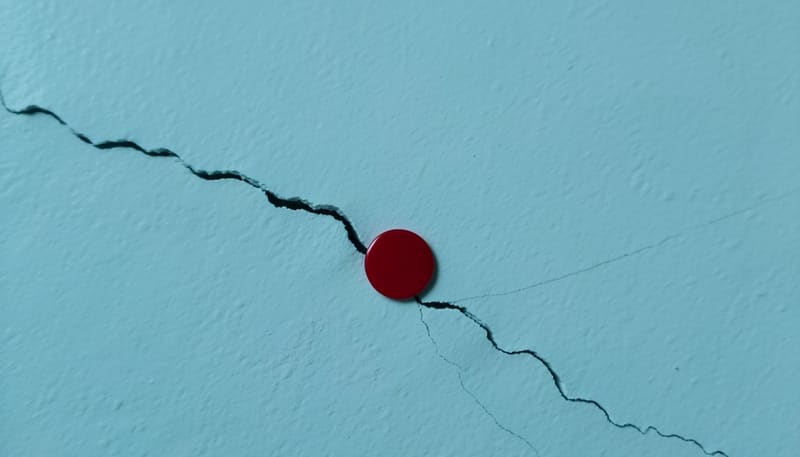
Look for movement, not just cracks. A fine crack or two is common in any house; several signs together, or cracks that look recent or keep coming back, suggest the footings are moving.
Cracks in brickwork
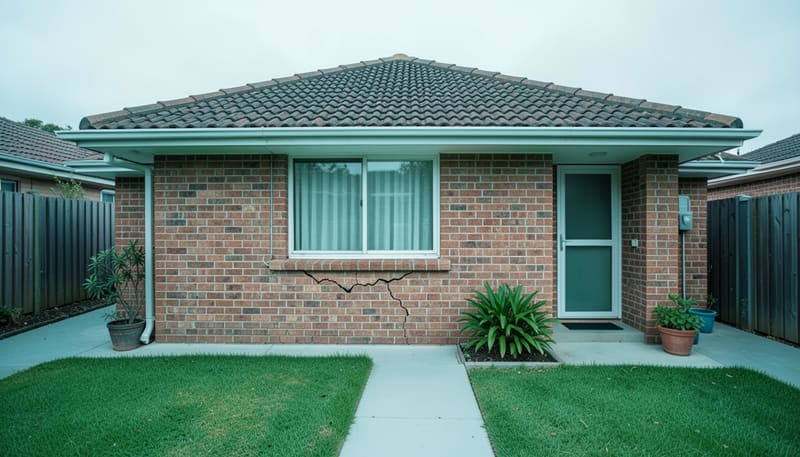
Stepped cracks through the mortar, diagonal cracks from window and door corners, and cracks wider at one end.
Doors and windows
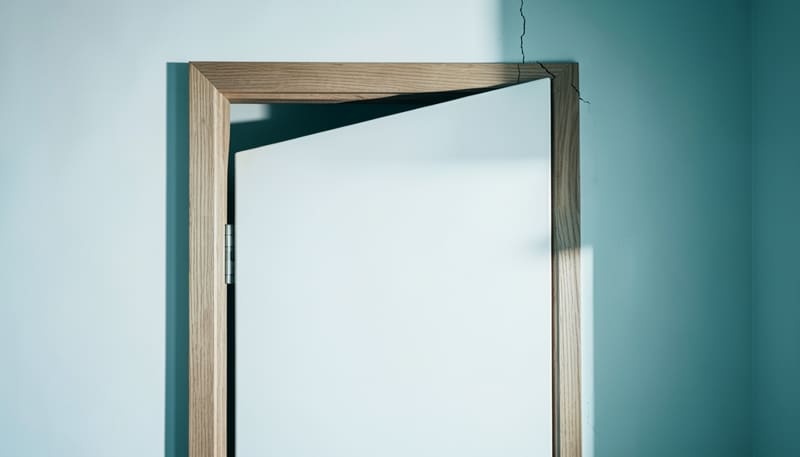
Doors that bind or won't latch, windows that stick, and gaps opening at the top of door frames.
Floors
Sloping or uneven floors, gaps under skirting boards and floor tiles cracked in a line.
Stumps and subfloor
In a raised timber house: leaning, rotted or sunken stumps, packing under the bearers and a damp subfloor.
Water around the house
Leaking taps and pipes, downpipes discharging against the walls, ponding and poor drainage.
Trees and soil
Large trees close to the house, and soil that cracks and shrinks away from the walls in dry weather.
Our guide to cracks in walls shows how engineers rate cracks, and house subsidence and movement explains why footings move.
Fresh paint over a crack
New filler, render or paint over a crack doesn't mean the problem has been fixed. It may be nothing, but ask when the work was done and why, and have the engineer look closely at those areas.
It also helps to ask the agent a few questions before the inspection:
- Are there earlier reports or permits? Engineer's reports and certificates for past underpinning or restumping show what's been done.
- When did the cracks appear, and have they been patched before?
- Have there been leaks or plumbing repairs? Leaks and poor drainage often explain footing movement.
Building inspector or structural engineer: who do you need?
Often both. A building inspector checks the general condition of the whole house and is the right first step for most purchases. When there are cracks, movement or stumps to replace, a structural engineer is the one to assess the cause and how serious it is.
| Building inspector | Structural engineer | |
|---|---|---|
| Best for | A general check of the whole house | Cracks, movement, sloping floors and stumps |
| Cracks | Noted and photographed; measuring varies | Located, measured and rated against AS 2870 |
| Cause of movement | Often outside the scope | The likely cause: clay, leaks, trees, drainage or fill |
| How serious it is | May recommend an engineer | Severity, and whether monitoring is needed |
| What to do next | Varies | No action, maintenance, monitoring, tests or a repair to be designed |
| Signed by | A building inspector | A structural engineer |
A general comparison. Scopes vary between inspectors and between engineers, so check what each report will include.
Our pre-purchase structural inspection is built for this situation. An engineer inspects the cracks, floors, walls, subfloor and site, then reports the likely cause, how serious it is and what repair, if any, it's likely to need, from $450 + GST for a typical house. Already own the house? A house structural inspection or foundation and crack report covers the same ground.
Buying a house that needs restumping
Restumping, also called reblocking, replaces the stumps under a raised timber-floored house. A house that needs it can still be a sound buy, but the price should allow for the work, and you need to know whether the stumps are the whole story.
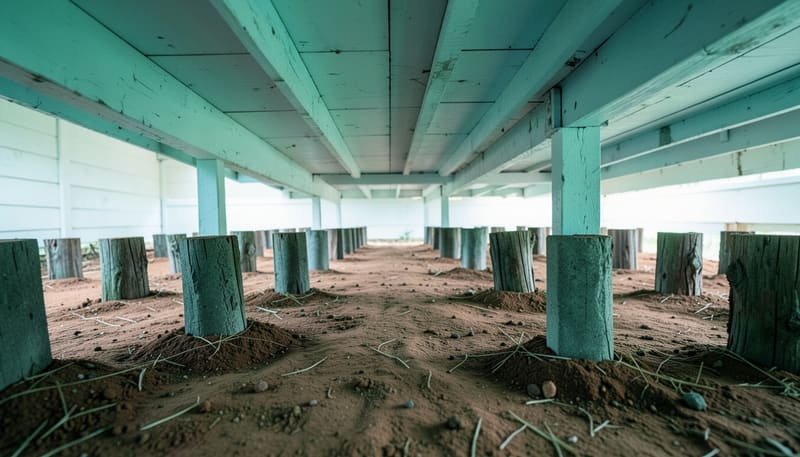
Published guides put restumping at about $5,000–$20,000 for a house, or $500–$700 per stump (hipages), and roughly $400–$700+ per stump or $10,000–$30,000+ for a full house (LevelMaster), checked October 2026. Because pricing is often per stump, the number of stumps that need replacing makes a big difference, and only a contractor's quote for that house gives a real price. Before you buy a house that needs restumping, find out:
- Is it a full or partial restump? Replacing a few failed stumps is a very different job from replacing them all.
- Is the floor framing sound? Rot or damage in the bearers and joists adds to the work.
- Is the subfloor damp? Leaks and poor drainage under the house keep the ground moving and need fixing too.
- Will it need a permit and engineering? That depends on your state and the scope; your building surveyor or certifier can confirm.
Not sure which repair a house needs? Our guide to underpinning vs restumping explains the difference and when each one applies.
Should you buy a house that needs underpinning?
It can be a reasonable buy when the cause is understood and the price reflects the repair. The risk is buying before you know either, because underpinning costs range widely and the cause decides whether underpinning is even the right fix.
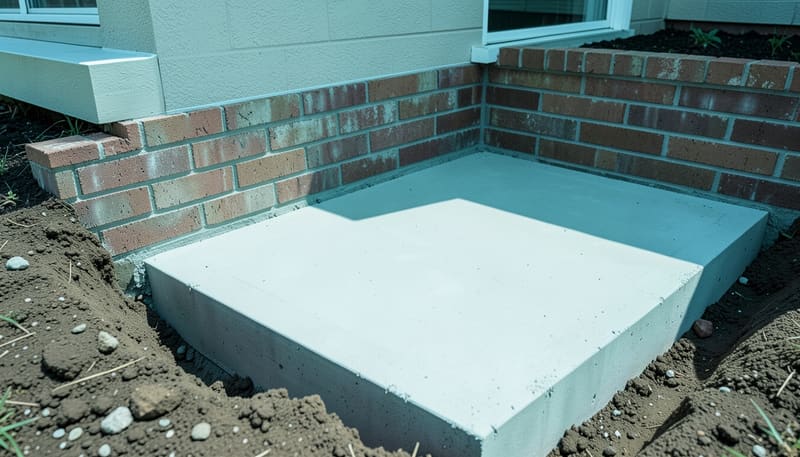
Underpinning strengthens or deepens the footings of slab or strip-footing houses, often brick ones. Methods range from mass concrete and bored piers to screw piles and resin injection, and none suits every house (see underpinning methods compared). If a leak or poor drainage is softening the ground, fixing it has to be part of the answer: underpinning without it leaves the cause in place.
Published cost ranges for restumping and underpinning
- Restumping a house (hipages)$5,000–$20,000
- Restumping a full house (LevelMaster)$10,000–$30,000+
- Underpinning a typical house (hipages)$10,000–$15,000
- Small underpinning jobs (QuickQuote)$5,000–$12,000
- Large underpinning jobs (QuickQuote)$25,000–$50,000
- Extensive piling for severe movement (Remedial Building Help)$40,000–$80,000+
Underpinning is structural work and usually needs a building permit or approval with an engineer's design; your building surveyor or certifier can confirm what applies. If the house has been underpinned before, ask for the design, the permit and any certificate. For what drives the price, read how much underpinning costs, and if a contractor has already quoted, our underpinning quote review checks the scope from documents and photos, from $390 + GST. Don't count on insurance paying later, either: many home policies exclude gradual subsidence and settlement (see does insurance cover subsidence?).
How long is the cooling-off period in each state?
Not long. It ranges from 2 clear business days in South Australia to 5 business days in NSW, Queensland and the ACT, while Western Australia and Tasmania have no general statutory cooling-off period. Exceptions apply, such as sales at auction, so check your contract with your conveyancer before you rely on one.
| State or territory | General rule for residential sales |
|---|---|
| New South Wales | 5 business days |
| Victoria | 3 business days |
| Queensland | 5 business days |
| South Australia | 2 clear business days |
| Australian Capital Territory | 5 business days |
| Northern Territory | 4 business days |
| Western Australia | No general statutory cooling-off period: buyers rely on contract conditions, such as a building inspection clause |
| Tasmania | No general statutory cooling-off period: buyers rely on contract conditions, such as a building inspection clause |
General rules for residential sales. Exceptions apply, such as auctions, and your contract decides the details.
Not legal advice
Whether a cooling-off period applies to your purchase, when it starts and ends, and what happens if you use it are questions about your contract. Ask your conveyancer or solicitor, and tell them early that you're arranging a structural inspection.
Plan the timing
A typical house takes one to three hours on site, and we confirm the report delivery date in your quote. Tell us your deadline when you ask for a quote and we'll confirm whether we can meet it. Buying at auction? Arrange the inspection before auction day. In WA or Tasmania, ask your conveyancer about a building inspection condition.
How does a pre-purchase engineer's report help you decide?
It turns a worrying crack into facts: what's moving, why, how serious it is and what kind of repair, if any, is likely. Those facts are what you need to go ahead, renegotiate or walk away.
Go ahead with confidence
If the cracks are minor or stable, or the cause is simple, like a leak, you know what to fix and can budget for it.
Renegotiate with evidence
If restumping or underpinning is likely, the findings and a contractor's quote give you a basis to discuss the price or repairs.
Walk away informed
If the movement is severe or its cause uncertain, you can decide not to take on the risk, within the terms of your contract.
Plan what happens next
If the report recommends monitoring or tests, you know what to arrange after settlement, and why.
The report is written for you in plain English: cracks measured and rated against AS 2870, the likely cause, severity, recommendations and photos, signed by a structural engineer. We never sell or carry out repairs, so we have no reason to make a problem sound bigger or smaller than it is. How you use the report, and what your contract allows, are matters for you and your conveyancer: we provide the engineering, not legal advice.
Should you buy it? A five-question decision flow
Work through these questions in order. They won't make the decision for you, but they show what you still need to find out.
Are there signs of movement?
Stepped or growing cracks, sloping floors, sticking doors or tired stumps.
Yes → Go to question 2No → A general building inspection may be enoughHas a structural engineer found the likely cause?
Reactive clay, leaks, trees, drainage, fill and failing stumps each lead to a different fix.
Yes → Go to question 3No → Book a pre-purchase structural inspection firstWill a simple fix be enough?
Sometimes repairing a leak or drainage problem and monitoring the cracks is all that's needed.
Yes → Budget for the fix and monitoring, then go to question 5No → Go to question 4Is restumping or underpinning likely?
The engineer's report describes the likely repair; published ranges and contractors' quotes show the cost.
Yes → Get quotes for the work, then go to question 5No → Ask the engineer what the repair involves, then go to question 5Does the price still work with the repair?
Weigh the cost, the disruption and any uncertainty against the price.
Yes → Go ahead, and keep the report with your documentsNo → Renegotiate or walk away, with your conveyancer's advice
Book before you're committed
Send the listing link, photos of the cracks and your deadline. We'll give you a fixed quote within 1–2 business hours and confirm when the report will be delivered. Our pre-purchase structural inspection starts from $450 + GST.
Do
- Book the engineer as early as you can
- Ask for past engineer's reports, permits and certificates
- Have the subfloor of a raised house checked
- Get your conveyancer's advice before you sign
Don't
- Assume fresh paint means a crack is fixed
- Rely on the agent's or vendor's view of the cracks
- Treat a contractor's free quote as a diagnosis
- Leave the inspection until the deadline is almost up
Sources and standards referenced
- hipages, restumping and underpinning cost guides. Published price ranges, checked 8 October 2026
- LevelMaster, restumping cost guide. Published price ranges, checked 8 October 2026
- Remedial Building Help, underpinning cost guide. Published price ranges, checked 8 October 2026
- QuickQuote, underpinning cost guide. Published price ranges, checked 8 October 2026
- Standards Australia, AS 2870-2011 Residential slabs and footings. Appendix C, Table C1: classification of damage to walls