The short answer
No underpinning method is best for every house. Mass concrete, bored piers, screw piles (also called helical piers or screw piers), resin injection and slab jacking each suit different soils, footings and causes, and any of them can fail if the cause of the movement, such as a leak or a tree, isn't fixed. The diagnosis should choose the method. We compare them as independent engineers: we don't sell any method.
Key takeaways
- The cause, the soil and the footing should choose the method, not the other way round.
- Mass concrete, bored piers and screw piles take the load down to firmer ground; resin injection improves the soil under the footing.
- Any method can fail if a leak, a downpipe or a tree keeps moving the soil.
- We design and certify. We don't sell, install or recommend any method or contractor.
Search for screw piles, resin injection or helical piers and many of the results come from companies that install them. That's natural, but it means many comparisons are written by someone with a method to sell. This guide compares the main underpinning methods from the engineer's side: how each one works, where it can suit, how it can fail and what an engineer checks before signing off. For the basics, start with what underpinning is. If your house sits on stumps, read underpinning vs restumping first.
Underpinning methods: quick facts
- Main methods
- Mass concrete, bored piers, screw piles, resin injection, slab jacking
- What decides
- The cause of the movement, the soil and the footing
- Down to firmer ground
- Mass concrete, bored piers and screw piles
- Work in the soil
- Resin injection; slab jacking lifts a slab by injection
- Shared weak point
- A cause that isn't fixed, such as a leak or a tree
- Our role
- Compare, design and certify. We sell no method.
How do the underpinning methods compare?
Here are the five main methods side by side: how each works, where it can suit, its limits and when it can fail, and what the engineer checks. None of them is our product, and the "can suit" column is general engineering guidance, not a recommendation for your house.
| Method | How it works | Can suit | Limits and failure | Engineer checks |
|---|---|---|---|---|
| Mass concrete | Concrete is cast in short sections under the footing, down to firmer ground. | Firmer ground at a moderate depth, with room to dig beside the footing. | Deep firm ground means deep, slow digging. Pads that stop short of firmer ground can keep moving. | The ground at the base of each pit, the order the sections are dug, and how each is packed tight to the old footing. |
| Bored piers | Holes are drilled to firmer ground, filled with concrete and tied to the footing, often with a beam. | Firmer ground deeper than mass concrete can practically reach, where a rig fits. | Needs rig access, and wet or collapsing ground complicates drilling. Short piers or weak connections let movement continue. | Pier depth and the ground at the base, reinforcement, and the connection to the footing. |
| Screw piles (helical piers) | Steel piles with helical plates are screwed to a firmer layer and tied to the footing with brackets or a beam. | Deeper firm ground, sites where little digging is wanted, and tighter access. | Rock, rubble or old fill can stop a pile short of the right layer. Steel needs corrosion protection in some soils. | Pile depths and installation records, the bracket or beam connection, and corrosion protection. |
| Resin injection | Expanding polyurethane is injected into the soil to fill voids, densify it and sometimes lift the footing. | Voids or loose, soft soil close under a footing, where digging isn't wanted. | Improves the soil rather than reaching deeper ground, so it may not stop movement from deeper or highly reactive soils. Over-lifting can crack walls. | Whether the soil and cause suit resin at all, injection depths and spacing, and levels during any lift. |
| Slab jacking | A slab is lifted back towards level by injecting material beneath it. | A slab that has genuinely sunk, for example over voids or settling fill. | If part of the slab heaved rather than sank, lifting the rest can be the wrong fix. Voids can return if the cause stays. | A floor level survey, whether the slab sank or heaved, and the cause. |
General guidance only. Each method suits different soils and causes, none suits every house, and the right one for yours depends on an inspection and, sometimes, a soil investigation.
Three common underpinning methods, side by side
- 1 · Mass concrete: concrete is cast in short sections under the footing, down to firmer ground.
- 2 · Screw piles or piers: steel piles are driven or screwed to a firmer layer and tied to the footing with brackets or a new beam.
- 3 · Resin injection: expanding resin is injected into the soil under the footing to fill voids, densify it and sometimes lift the footing.
How does mass concrete underpinning work?
Mass concrete underpinning extends the footing down to firmer ground with concrete. The ground beside and under the footing is dug out in short sections, so the wall above stays supported, and concrete is cast under the footing in each one. Each section is packed tight to the old footing before the next is dug.
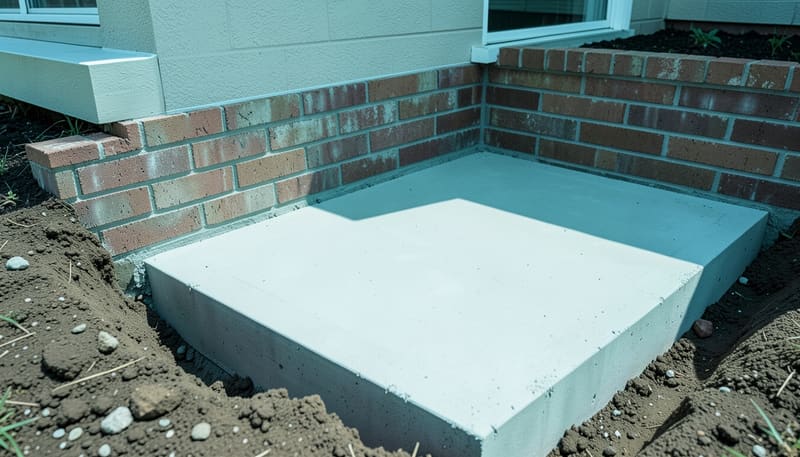
It can suit houses where firmer ground is a moderate depth down and there's room to dig. Where firmer ground is deep, the excavation gets slow, disruptive and costly, and another method may suit better. The weak point is the base: a pad that stops short of firmer ground, or sits on clay that keeps shrinking and swelling, can keep moving with the house.
What are bored piers, and when do they suit?
Bored piers, also called concrete piers, are holes drilled down to firmer ground and filled with concrete, then tied into the house, often with a new beam or brackets under the footing. They can reach deeper than mass concrete practically can.
The trade-offs are access and ground conditions. A drilling rig has to reach each pier position, and wet or collapsing soil can complicate the drilling. Like every pier or pile, a bored pier only works if it reaches a suitable layer and is properly connected to the existing footing, which in an older house may be shallow or weak itself.
Screw piles and helical piers: how do they work?
Screw piles, also called helical piers or screw piers, are steel shafts with helical plates that are screwed into the ground until they reach a firmer layer. They're then tied to the footing with brackets or a new beam. Little excavation is needed, and the installation equipment can suit tighter sites.
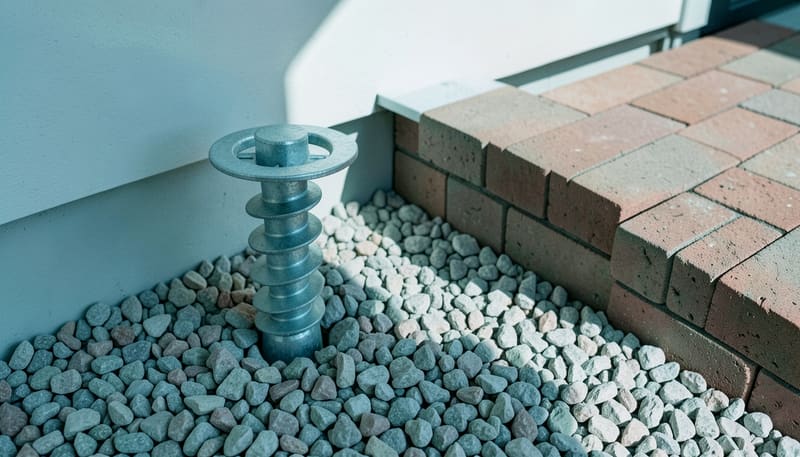
Their weak points are underground. A pile can stop on rock, rubble or old fill and look finished without reaching the layer the design relies on, and steel needs suitable corrosion protection in some soils. Installers often record how hard each pile was to turn, the installation torque, as a check on capacity, and the engineer reviews those records against the design.
Resin injection: what is chemical or resin underpinning?
Resin injection, also called chemical or resin underpinning, pumps expanding polyurethane into the soil under a footing through small injection tubes. The resin fills voids, densifies the soil and can sometimes lift the footing back towards level. There's no large excavation, and the work can be quick.
Its limits come from what it does. Resin improves the soil it reaches, rather than carrying the load down to deeper ground the way piers and piles do. Where movement comes from deeper soils, or from reactive clay that keeps shrinking and swelling with the seasons, it may not be the right fit. Lifting also needs control: lifting too far or too fast can open new cracks.
What is slab jacking?
Slab jacking lifts a concrete slab back towards level by injecting material beneath it, such as resin or grout. It's aimed at slabs that have sunk, for example over voids or poorly compacted fill.
It only makes sense if the slab actually sank. On reactive clay, part of a slab can heave instead: edge heave and centre heave describe where the lift is. A slab that looks low at the edges may have risen in the middle, and jacking the edges up to match could be the wrong fix. A floor level survey and a diagnosis come first. Read more in reactive clay and slab heave.
Same method, different names
Quotes use several names for the same thing. Screw piles, screw piers and helical piers are one family. Bored piers are also called concrete piers. Resin injection is also called chemical or resin underpinning, and slab jacking is also called slab lifting.
When does each underpinning method fail?
Every method can fail, and the reasons overlap more than you might expect. These are the main ones, stated generally: whether any applies to your house needs an inspection. For the causes behind the movement itself, see house subsidence and movement.
The cause wasn't fixed
A leaking pipe, a downpipe or poor drainage that keeps soaking the soil, or a tree that keeps drying it, can undo any method.
Piers or piles stopped short
A pier or pile that stops on rubble, rock or fill above the layer the design relies on can keep settling with the house.
The soil didn't suit resin
Resin may not stop movement that comes from deeper soils or highly reactive clay, so the soil has to be understood before injection.
The slab heaved, not sank
Lifting a slab to match a part that actually heaved can leave the floor further out of level.
A weak connection
New pads, piers or piles only help if they're properly connected to the existing footing, which in an older house may be weak itself.
Only part of the house was treated
An underpinned section can behave differently from the rest of the footing, and cracks can appear where the two meet.
Underpinning treats the footing, not the cause
If the leak, downpipe or tree that moved the house is still there, ask how the design deals with it before choosing any method. Fixing the cause can cost far less than underpinning, and sometimes, with monitoring, it's enough.
How does an engineer choose the right method?
By working backwards from the cause. The process is the same whichever method ends up on the drawings.
- Step 1
Inspect the house
Cracks are measured and rated against the AS 2870 damage categories, and doors, floors, drainage, plumbing, trees and site conditions are checked.
- Step 2
Diagnose the cause
Why did the footing move? Sometimes a geotechnical soil investigation or a plumbing test is needed first.
- Step 3
Deal with the cause
Leaks, drainage and trees are fixed or managed, so the repair isn't fighting the same problem.
- Step 4
Choose and design the method
The methods that suit the soil, the footing and the cause are compared, and the one that fits is designed.
- Step 5
Document it for the permit
The design documents go with the application for the building permit or approval.
- During and after
Inspect and certify
The critical stages are inspected while the work is built, and the finished work is certified.
Any licensed contractor can build the design, so you can compare quotes on the same scope. Our underpinning design and certification covers each step, and do I need an engineer for underpinning? explains when an engineer's design is needed. If you're still at the cracks stage, start with a foundation and crack report or our guide to cracks in walls.
What do the different underpinning methods cost?
Published guides price each method in different units, so the figures don't compare directly. All were checked 8 October 2026, and none are our prices.
- Mass concrete: $1,000–$3,000 per linear metre of wall (Remedial Building Help, citing Mainmark's published figure)
- Piers: about $2,500–$5,000 each (QuickQuote)
- Screw piles: $250–$500 per m² as an area guide (a Melbourne contractor's guide)
- Resin injection: $4,000–$16,000 per job (Buildfix, a resin contractor)
The total depends on how many metres, piers or square metres the design calls for. See the underpinning cost guide for whole-job ranges, what drives the price and engineer fees.
Why don't we sell any underpinning method?
Because the method should follow the diagnosis. We don't sell any method, we don't install anything and we don't recommend contractors. We're paid for the engineering whichever method the design uses, so there's nothing to gain from steering you to one.
A method seller's comparison
- Starts from the method they install
- May not test why the house moved
- Scope and price set by the seller
- Free, because it leads to a quote
An independent engineer's comparison
- Starts from the cause of the movement
- Weighs every method that could suit
- Designs a repair any licensed contractor can build
- A fixed fee, whichever method is used
Already been offered a method?
Our underpinning quote review checks whether the proposed method suits the cause and the soil, and what the quote leaves out, from $390 + GST (see our fees). If the cause hasn't been diagnosed yet, a house structural inspection comes first.
Sources and standards referenced
- Standards Australia, AS 2870-2011 Residential slabs and footings. Appendix C, Table C1: classification of damage to walls
- Remedial Building Help, underpinning cost guide. Mass concrete underpinning $1,000–$3,000 per linear metre of wall, citing Mainmark's published figure. Checked 8 October 2026
- QuickQuote, underpinning cost guide. Individual piers about $2,500–$5,000 each. Checked 8 October 2026
- A Melbourne contractor's screw pile cost guide. Screw piles as an area guide of $250–$500 per m². Checked 8 October 2026
- Buildfix, resin injection pricing. $4,000–$16,000 for resin injection jobs. Buildfix is a resin contractor. Checked 8 October 2026